The Old Testament features various leaders, including Moses, Elijah, and Deborah, who guided and mentored the people according to God’s plan. Several mentoring relationships are found in the Old Testament. In Exodus 18, Jethro instilled the value of delegation in his son-in-law, Moses. Moses trained Joshua to lead Israel into Canaan (Dt. 31:1-8; 34:9). Caleb received instruction from Moses to take on leadership roles and was given absolute confidence in the Lord’s promise (Nm 13; 14:6-9, 34:16-19; Jos 14:6-15). Throughout the turbulent times of Saul’s waning rule, Jonathan and David remained devoted to one another (1 Sm 18:1-4; 19:1-7; 20:1-42). Elisha was chosen by the Prophet Elijah to be his successor, and it is said that Elijah mentored Elisha in the ways of the Lord. At the same time, Elisha provided for Elijah’s necessities (I Kgs 19:16-21; 2 Kgs 2: 1-16; 3:11). When Joash, at seven years old, ascended to the kingdom of Judah, the priest Jehoiada assisted him. Unfortunately, following the death of his master, Joash drifted away from the Lord (2 Chr 24:1-25). For this blog, let us look at one mentor-mentoree relationship in more detail.
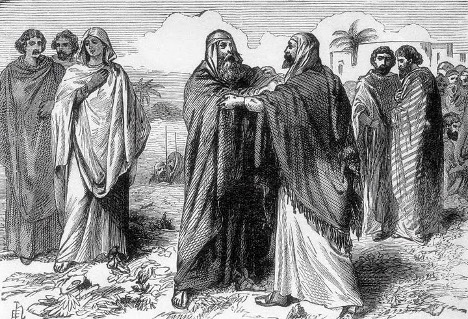
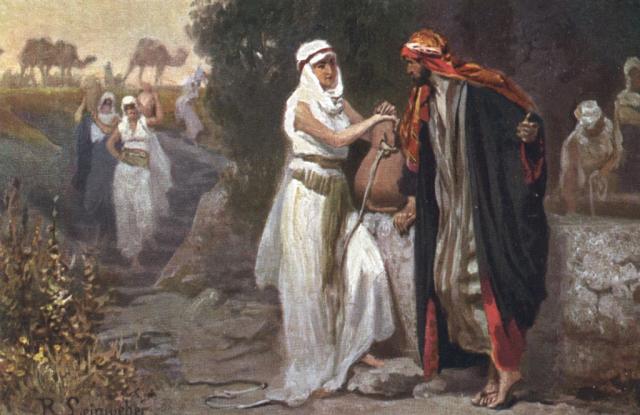
When one thinks of mentoring in the Old Testament, one of the first mentoring relationships is between Jethro (also known as Reuel) and Moses. We must understand the context of this relationship and how it develops. First, we begin with Moses. We know of Moses growing up in the King of Egypt’s home. In Moses’ younger years, he kills an Egyptian by beating a Hebrew (Ex 2:11-15). Having run away, we find Moses next to a well in Midian. During this time, he meets the daughters of the priest of Midian’s, who is coming to water their flock. When shepherds arrived and drove them away, Moses came to their aid and helped water the flock (2:15-18). After the daughters of Reuel returned home and told the story to their father, he sent them to request that Moses come and share a meal with the family. Moses settled in Midian and married Zipporah, one of Reuel’s daughters. They had two sons, Gershom and Eliezer (Ex 2:19-22; 18:1-6).
Moses works at attending Jethro’s flock. He leads the flock past the wilderness to Horeb, where he encounters the angel of the Lord in the burning bush, calling him to lead the Israelites out of Egypt (1-17). After his time on Mount Horeb, he returned to Jethro and asked permission to return to Egypt. Jethro agrees to allow Moses to return, and Moses takes his wife and sons and returns to Egypt (Ex 3:18-20). During this time, we see the leadership of Moses as a shepherd and a prophet in Israel.
The next time we see Jethro and Moses is at Mount Sinai. He rejoices over Yahweh’s deliverance of Israel and relation. He offered thanksgiving sacrifices and counseled Moses regarding the administration of justice (Ex 18: 1-27). Following the departure and the wilderness food and water problems, God tasked Moses with organizing the former slave society into a sustainable institutional shape. Jethro advises Moses to delegate his responsibilities to keep him from wearing out. It was this advice that brought forward the governing strategy for Israel.
According to Walter Brueggemann, Jethro sees Moses as a judge and administrator of the past. Before entering mentor mode, he questions Moses to ensure he understands the scenario accurately. He inquires as to what Moses is doing for the people. Why does he sit alone, doing everything and making all decisions independently (Ex 18:14)? Then Jethro responds, “I will give you counsel.”
We find Jethro’s reply straightforward: “What you are doing is not good! You and these people who come to you will only wear yourselves out. The work is too heavy for you; you cannot handle it alone.” Jethro not only pointed out Moses’ issue; he also offered some doable solutions. Jethro then provides insight and advice, “Listen now to me, and I will give you some advice, and may God be with you.” We find Jethro providing the principle of delegation, where he encourages Moses to appoint leaders under him who would judge the less significant cases. Moses then could handle the most complex matters. “If you do this and God so commands, you will be able to stand the strain, and all the people will go home satisfied” (Ex 18:14-18).
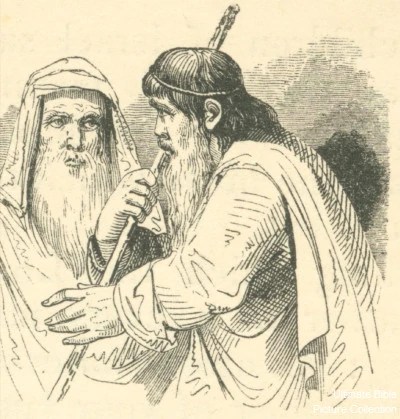
Moses listens to Jethro’s wisdom. This counsel has become the cornerstone of Israel’s judicial system. It helps Moses, who does not need to do everything, and recognizes help is available. The genuine concern for Moses’ growth and why Jethro stepped in to help Moses is revealed in these three reasons.
- First, Jethro probably wanted Moses to succeed even more than Moses did. This reveals Jethro’s genuine intention.
- Second, Jethro feared the Lord and recognized that the success of Moses’ venture would go a long way toward vindicating his faith (Ex 18:1, 11-12).
- Third, Jethro was interested in seeing people surviving the desert journey to the Promised Land, and he knew the perils that awaited them.
Subsequently, Jethro knew Moses was the best person to lead them through the wilderness because of his forty-year experience tending Jethro’s flocks in the area. Jethro understands Moses’ background and experience and determines that Moses is the best to accomplish a job. Finally, Jethro knew that it was critical that this leader remained in good health and did not wear himself out or the people. Jethro understood the value of self-awareness and care and how easily Moses could be mentally and physically exhausted. Moses and Jethro benefited from Jethro’s mentorship, as the relationship affects both mentors and mentorees. Bruggeman praises Jethro as a model mentor who identifies dilemmas, proposes solutions, and enhances productivity.
 Cahill's in Asia
Leave a comment